
 |
| Add caption |
What can you do to help myself?
There are
several ways you can do to improve your symptoms and reduce the chance of the
disease becoming worse, including:
1) Exercise
regularly
- While you may worry that exercising with osteoarthritis could harm your joints and causes more pain, researches have shown that exercise is considered the most effective non-drug treatment for reducing pain, prevent stiffness and improving movement
- However, you may need to break your exercise into few sessions a day to reduce pain due to excessive activities
- 3 important types of exercise:
I. Range of
movement or flexibility exercise

These include gentle stretching and
movements that take joints through their full range of motion. Do these
exercises regularly, preferably every day to help improve the joint flexibility
II. Aerobic exercise
II. Aerobic exercise

Any exercise that increases your pulse rate and makes you a bit
short of breath (for example brisk walk, swimming or using a stationary
bike). These exercises improve your fitness level, help you to reduce weight by
burning calories and improve your sleep and mood

Exercises that improve the strength and tone of the muscles to helps
to stabilize and protect the joint

3) Losing weight if you’re overweight or obese as overweight can exerts more pressure to the joint causing more pain. This can be achieved by changing to a balanced, lower calorie diet and combined with regular exercise.
4) Taking supplements – Glucosamine and/or chondroitin. These are compounds that are normally found in joint cartilage.

6) Using over-the–counter painkillers such as paracetamol, aspirin or pain-relieving creams, ointment, gels or spray


If you are planning to try any of the alternative medicine, please make sure you choose a practitioner/ therapist with recognized qualification and registered under respective professional bodies.
2) Reducing
stress on the affected joint, including:
- Pace your activities through the day - don’t tackle all the physical jobs at once
- Wear low-heeled shoes with soft, thick soles
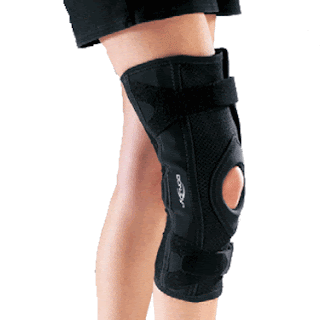
- Use a supportive devices for example walking stick or knee brace
- Use the handrail for support when climbing stairs


3) Losing weight if you’re overweight or obese as overweight can exerts more pressure to the joint causing more pain. This can be achieved by changing to a balanced, lower calorie diet and combined with regular exercise.
4) Taking supplements – Glucosamine and/or chondroitin. These are compounds that are normally found in joint cartilage.

5) Applying hot
pack to the affected joint to relief pain and stiffness; cold pack is use
when there is associated joint swelling


6) Using over-the–counter painkillers such as paracetamol, aspirin or pain-relieving creams, ointment, gels or spray
What treatments
are there?
If you still
have pain after trying self-help measures, you need to consult a doctor to help
you to manage your symptoms which may include:
- Comprehensive physiotherapy sessions and exercise plan
- Stronger analgesia or painkillers
- Steroid injections into the painful joint
- Hyaluronic acid injections
- Stem cell therapy
- Surgery – total joint replacement when most conventional treatments failed to resolve the symptoms. Artificial joint may last 15 – 20 years
Can I go for
alternative treatment?
There are
many different alternative or complementary therapies that available to help
alleviate some of the symptoms such as pain and stiffness. However, what
works for one person may not work well for another. Some of the most popular
therapies that available in Malaysia are listed as below:
- Acupunture: may be useful in osteoarthritis as it claims to restore the natural balance of health by inserting fine needles into specific acupoints in the body to correct imbalances in the flow of energy (qi) thereby relieving pain

- Chiropractic: manually adjust the malalignment of the body aiming to improve mobility and relieve pain

- Homeopathy: use homeopathic remedies to relieve pain
- Massage: can loosen stiff muscles, ease tension, improve muscle tone and increase the flow of blood and lymphatic drainage
- Tai chi or qi gong: a type of exercises from China designed to calm the mind and promote self-healing through sequences of slow, grateful movements incorporated with visualization and sequential breathing

If you are planning to try any of the alternative medicine, please make sure you choose a practitioner/ therapist with recognized qualification and registered under respective professional bodies.
For more
information regarding exercise plan for osteoarthritis, treatments of osteoarthritis including steroid
and hyaluronic acid injection, platelet-rich plasma, stem cell therapy or any other inquiries, please
contact us at +603-79601211 or email us at care@cliqueclinic.com


